July 01, 2026 | Case study | 5 minute read


Learn how we make the world a better place as Team Dow. Through respect and integrity, we lead with our core values and innovative spirit to create more sustainable materials science solutions for everyone.

Discover how we’re accelerating positive change around the world. Dow is making a difference in the communities where we live and work.
Find the latest press releases, news updates, awards and achievements from Dow and stay connected on the impact we’re making in the world.

Explore key collaborations and why we make partnership our passion. Through initiatives and sponsorships, we can work together to create a more positive impact for all.

Team Dow makes us one of the most innovative, customer-centric, inclusive and sustainable materials science companies in the world. Find opportunities to join Dow in a capacity that works best for you.
July 01, 2026 | Case study | 5 minute read
Connectivity is no longer just a digital service — it is core infrastructure that it has to deliver more to keep the world moving. Every AI model trained, every cloud workload deployed, every video call and direct message depends on a physical foundation of data centers, networks and cables that must perform continuously, often under extreme weather conditions.
As technology advances, expectations rise for reliability, efficiency and scale. For telecom operators, data center designers, and network owners, telecommunications infrastructure must handle today’s loads and be designed to progressively adapt to future demand.
Dow’s role in this evolution is grounded in materials science expertise: enabling data center liquid cooling solutions, durable telecom cable compounds, and a broader ecosystem that supports performance across the full connectivity value chain.
The AI ecosystem and high-performance computing are driving unprecedented thermal density inside data centers. This demand means heat becomes a limiting factor not just for efficiency, but for uptime and hardware longevity. If heat is not managed effectively, it can constrain network performance, increase maintenance complexity, and limit future expansion.
Our approach to telecommunications infrastructure is intentionally ecosystem‑based. Rather than focusing on a single product or portfolio, we offer multiple cooling solutions that can be combined and scaled over time:
This integrated approach allows operators to evolve infrastructure incrementally — adapting to new workloads without systemic redesign.
Cooling solutions have shifted from a background utility to a mission‑critical system. This is why liquid cooling approaches are becoming central to modern data center design. Direct‑to‑chip cooling alongside immersion cooling is part of our flexible, multi‑pathway approach that enables operators to match cooling strategies to operational goals.
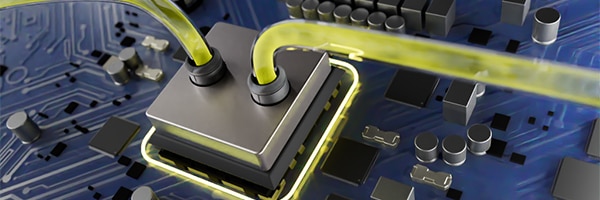
Direct-to-chip cooling is where a cooling fluid circulates through a closedloop system to remove heat directly from processors
DOWFROST™ LC 25 Heat Transfer Fluid is designed for these liquid cooling loops. As a direct-to-chip cooling fluid, it supports consistent heat transfer while helping protect system components. In high-availability environments such as hyperscale data centers and telecom, fluid reliability matters — not only for thermal performance, but also for long-term system integrity and maintenance planning.
By supporting controlled heat removal at the source, direct-to-chip cooling can help data centers operate within design limits as compute density increases without relying solely on higher airflow or larger mechanical systems.
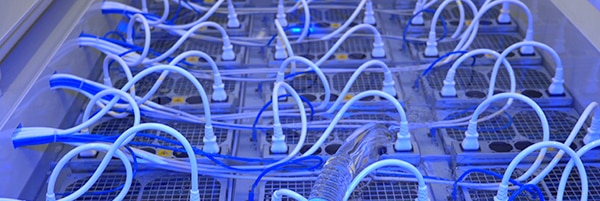
As data center demands continue to accelerate, traditional cooling approaches are being pushed to their limits. Immersion cooling is emerging as a complementary pathway — enabling new levels of thermal efficiency by submerging electronic components directly in a dielectric fluid.
DOWSIL™ ICL-1100 Fluid is designed specifically for these environments. As part of our immersion cooling portfolio, it delivers efficient heat transfer while remaining compatible with sensitive electronic components, helping operators manage increasing power densities with confidence.
This approach opens up new possibilities for data center design, from supporting higher rack densities to enabling alternative facility layouts in locations where space or airflow constraints limit conventional air cooling.
While system-level cooling is essential, effective thermal management must also extend inside the hardware. Within telecom and datacom equipment, thermal interface materials (TIMs) play a critical role in transferring heat away from high-value, heat-sensitive components.
Dow’s silicone-based TIM solutions are engineered to deliver both thermal performance and reliability in demanding applications:
Together, these materials help address heat where it matters most, at the component interface, supporting overall system reliability as data rates rise and power densities continue to increase.
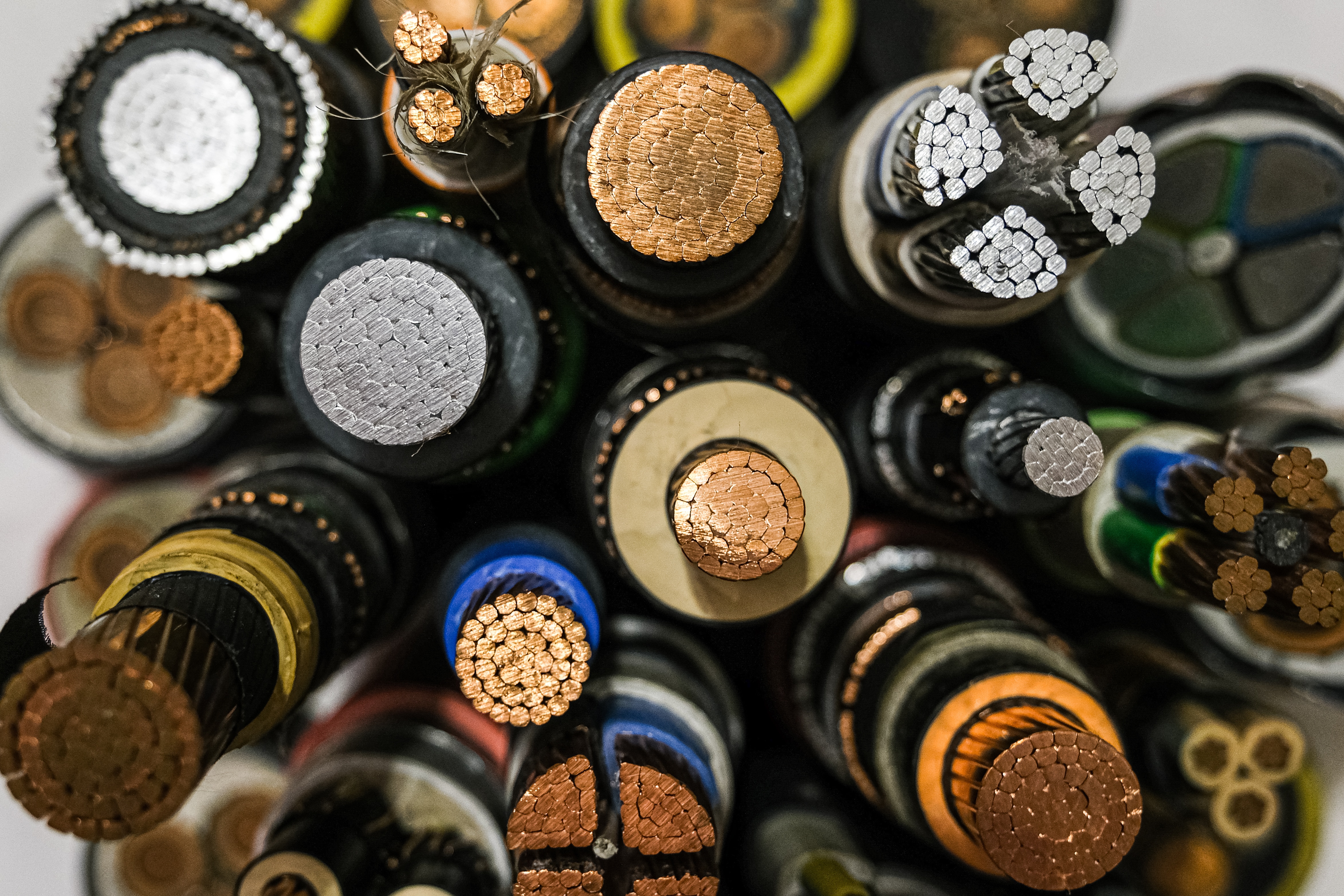 Data centers provide the engine for modern digital communications, but physical networks carry that connection to people and places in everyday life. Fiber and telecom cables must withstand weather, temperature extremes, mechanical stress, and long service lifetimes; often in environments that are difficult or costly to access.
AXELERON™ Telecom Cable Compounds are designed for insulation and jacketing applications that help protect telecom cables in demanding conditions. These telecom cable compounds support durability and longevity, helping network operators maintain consistent performance over time.
Robust cable materials can help reduce failure rates, support easier installation, and extend asset life — factors that directly affect network reliability and total cost of ownership.
As connectivity becomes critical infrastructure, the materials that support it matter more than ever.
Whether enabling high-volume data communications, supporting edge networks, or extending fiber into harsh environments, materials that manage heat and protect assets help turn performance goals into operational reality. Flexible cooling pathways, data center liquid cooling solutions, and durable telecom cable compounds all play a role in building networks designed for long‑term performance.
The outcome is infrastructure, built for the future, that can scale with demand, maintain uptime under pressure, and operate more predictably over its lifecycle.
Direct‑to‑chip cooling uses a liquid circulating through a closed loop to remove heat directly from processors, while immersion cooling submerges components in a dielectric fluid that absorbs heat across the system.
Liquid cooling helps manage higher heat loads from AI and high-performance computing by removing heat more efficiently than air, supporting reliable performance, uptime and scalability as computing density increases.
Telecom cable compounds help protect networks from environmental stress, mechanical damage, and aging while also helping maintain signal integrity and long‑term performance in demanding real‑world conditions.
This article was developed by a cross-discipline team representing global market expertise in connectivity data centers and telecommunications infrastructure. To explore other aspects of high-performance infrastructure solutions, visit dow.com.