April 28, 2026 | Jim Fitterling | 5 minute read

Learn how we make the world a better place as Team Dow. Through respect and integrity, we lead with our core values and innovative spirit to create more sustainable materials science solutions for everyone.

Discover how we’re accelerating positive change around the world. Dow is making a difference in the communities where we live and work.
Find the latest press releases, news updates, awards and achievements from Dow and stay connected on the impact we’re making in the world.
Explore key collaborations and why we make partnership our passion. Through initiatives and sponsorships, we can work together to create a more positive impact for all.
Team Dow makes us one of the most innovative, customer-centric, inclusive and sustainable materials science companies in the world. Find opportunities to join Dow in a capacity that works best for you.
April 28, 2026 | Jim Fitterling | 5 minute read
The petrochemical industry is undergoing one of its most fundamental shifts in decades. Four years of sustained slow global GDP growth, a K-shaped consumer economy, the rapid development of AI, and geopolitical uncertainty are reshaping the macroeconomic landscape. That was all true before the conflict in the Middle East essentially shut in 20% of the world’s oil capacity overnight and left 50% of ethylene and polyethylene supply either offline, constrained, or otherwise impacted. The long-term impact of this latest energy disruption remains to be seen.
Together, these long-term trends and short-term shocks are changing how companies think about feedstock flexibility, manufacturing footprints, supply chain security, capital discipline, and what “resilience” really means in an era of historic volatility.
Recent discussions across the industry, including at the World Petrochemical Conference (WPC) and CERAWeek in March, reinforced a clear takeaway: the next phase of growth will favor companies and regions that combine cost advantage with reliability, integration and the ability to adapt quickly as conditions change.
The rapidly evolving situation in the Middle East drove nearly every discussion at WPC. Beginning in late February, disruptions to shipping lanes in the Strait of Hormuz have effectively taken roughly 20% of global oil supply offline, and markets have been forced to reprice risk. Second-order effects span across nearly every industry. Even after the Strait is reopened, whenever that occurs, supply chains will take quarters to unwind, not weeks.
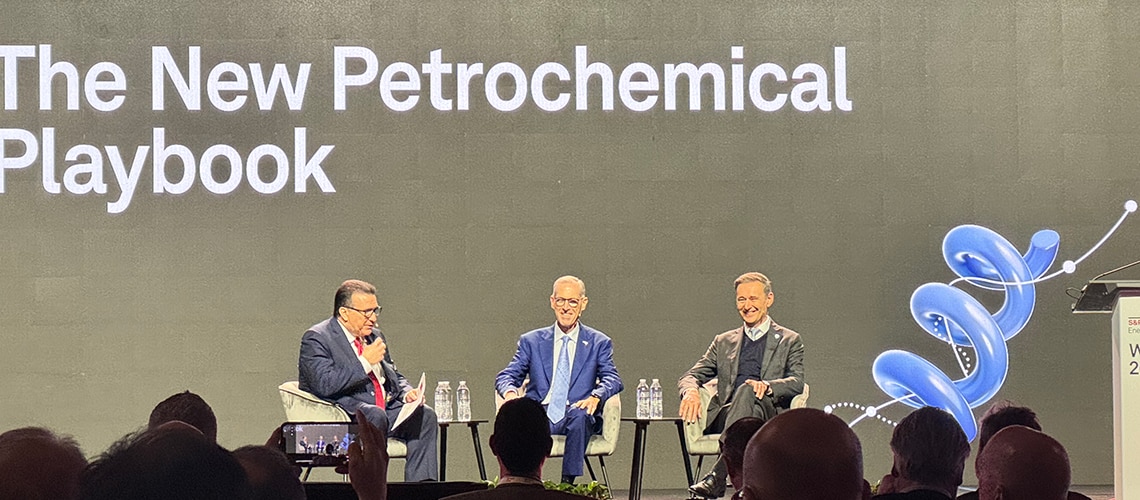
In a WPC conversation alongside Peter Vanacker of LyondellBasell, and Mark Eramo of S&P Global Commodity Insights, we examined the challenge of managing the short-term and planning for the long-term.
Because of the situation in the Middle East, we’ve moved from a structurally long market to one that is extremely tight. On top of the significant dynamics in the Middle East, the industry had been experiencing both a cyclical downturn and a structural reset. Global overcapacity has recently reshaped competitive dynamics — but it’s often major disruptions that can lead to changes in demand patterns, cost structures, and other factors that create long-term structural impacts.
At the same time, regional differences in energy costs, policy, and infrastructure will continue to drive industrial competitiveness moving forward.
In this environment, fundamentals matter even more. Companies need to look hard at feedstock diversification, customer challenges and preferences, and geographic footprint. This will continue to happen on a country-by-country and region-by-region basis as well. As we saw in parts of Europe, like Germany, following Russia’s invasion of Ukraine, policymakers will take steps to address the structural conditions that enable industrial competitiveness. Some of those adjustments may take 3-5 years to play out, but they will shape the industry for the next decade or more.
Cost position, asset integration, and capital discipline are what determine performance across cycles. The companies that win will be the ones that can operate reliably at the low end of the cost curve and make consistent, returns-driven investment decisions.
Due in part to our cost-advantaged footprint in the Americas, Dow has demonstrated the significance of our reliability, feedstock flexibility, and agile supply chains at a time when global supply is increasingly constrained. These purpose-built advantages began to shine through toward the end of the first quarter, and we expect them to contribute positively to Dow’s results throughout 2026.
AI energy demand is accelerating rapidly, with data center power demand becoming a meaningful driver of global electricity consumption.
This shift is creating new constraints on energy systems, while also opening new opportunities across the petrochemical value chain. The decisions companies and policymakers make around energy competitiveness have a measurable impact on long-term success.
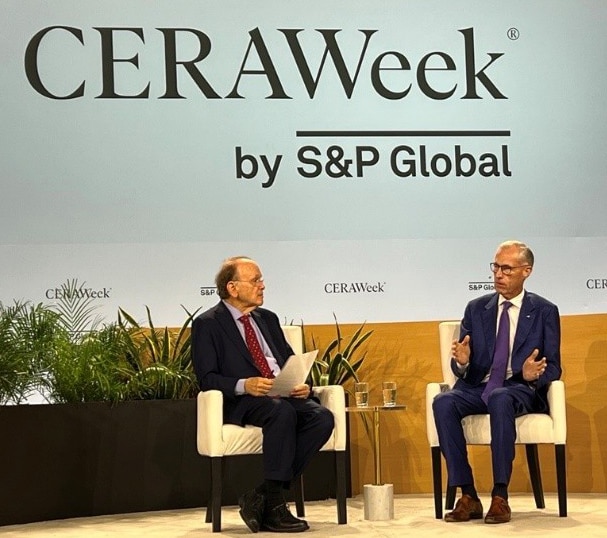 As Dan Yergin, vice chairman of S&P Global, and I discussed at CERAWeek, energy demand is growing, meeting global demands will require an all-of-the-above energy strategy.
Regions with advantaged energy, disciplined policy, and integrated infrastructure will continue to attract investment. Those without risk losing it. And companies that ensure their strategies are agile, resilient, and responsive to fast-changing conditions will be most successful.
Looking ahead, AI will continue to play an outsized role in energy discussions.
AI and digital infrastructure are driving a meaningful increase in demand for reliable, scalable electricity, requiring significant new generation capacity. This shift is creating new opportunities across our industry, while also reinforcing the importance of balanced, pragmatic energy solutions. At the same time, our materials and technologies are playing a critical role in enabling this build-out, creating new avenues for growth, for example, in data center cooling solutions.
Meeting the energy demand of the AI buildout will require a practical approach.
Natural gas will play a critical role in the near term, while emerging solutions like small modular nuclear — like Dow is pioneering with X-energy — offer important long-term potential. The growing need for always-on power highlights the importance of energy security and grid resilience for both data centers and industrial operations.
Recent disruptions have underscored the importance of resilience, and it’s easy to understand why. But shocks like the one we are experiencing now also provide an opportunity to shore up competitiveness.
The decisions we make today will determine our future. Dow is focused on prioritizing reliable and competitive energy, advancing operational and technological innovation, maintaining disciplined investment in advantaged assets, and advocating for policies that support industrial competitiveness.
For our part, we will continue to focus on staying disciplined and flexible, while we strategically build for the long-term.
Additional conversations from the 2026 World Petrochemical Conference.

Jim Fitterling is executive chairman of Dow's Board of Directors. He served as the Company’s chief executive officer from July 2018 through June 2026 and was elected board chair in April 2020. During his more than 40-year career with Dow, he helped shape the Company's transformation into a leading materials science innovator focused on customer needs and long-term growth.