Oct 29, 2026 | 6 minute read


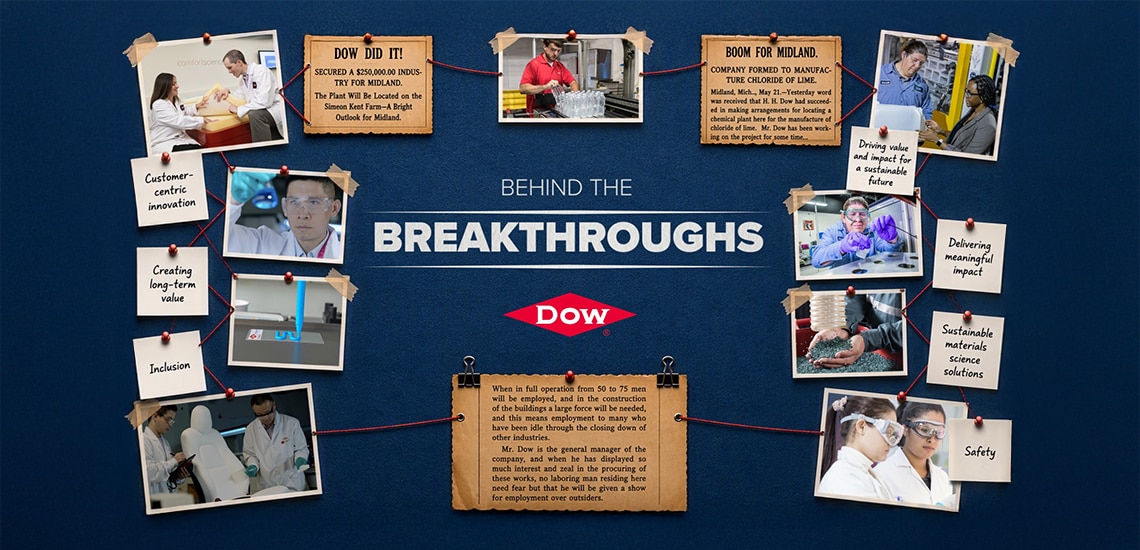
Learn how we make the world a better place as Team Dow. Through respect and integrity, we lead with our core values and innovative spirit to create more sustainable materials science solutions for everyone.

Discover how we’re accelerating positive change around the world. Dow is making a difference in the communities where we live and work.

Find the latest press releases, news updates, awards and achievements from Dow and stay connected on the impact we’re making in the world.

Explore key collaborations and why we make partnership our passion. Through initiatives and sponsorships, we can work together to create a more positive impact for all.
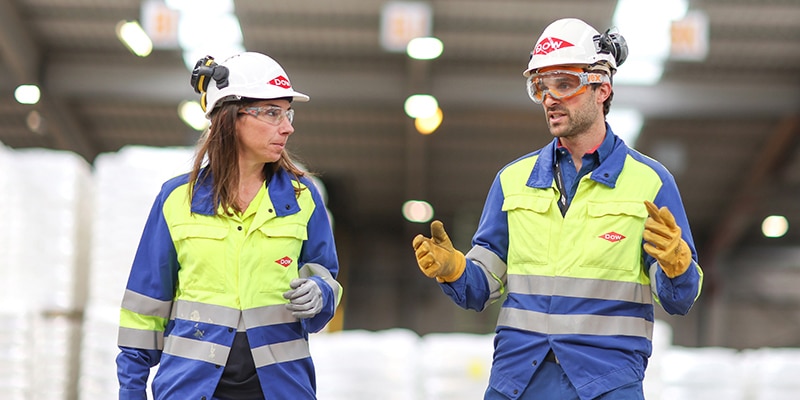
Team Dow makes us one of the most innovative, customer-centric, inclusive and sustainable materials science companies in the world. Find opportunities to join Dow in a capacity that works best for you.
Oct 29, 2026 | 6 minute read
From food packaging to the technology we rely on every day, performance often depends on innovations we rarely see.
Behind the Breakthrough takes a closer look at the materials science working behind the scenes to help solve complex, real-world challenges. Each story explores the changing demands shaping an industry, the trade-offs that make progress challenging, and how science and collaboration can help turn possibilities into practical solutions.
Go behind the breakthrough to discover how materials science is helping everyday products do more.
Food packaging is part of everyday life. It shows up on grocery shelves, in warehouses, meal kits, delivery bags and on front porches.
And when packaging does its job well, most people never notice.
But expectations are changing. People want to know: Is the food fresh? Is it protected? Is the package easy to open and reseal? And what happens to the package after the last bite?
Meeting those expectations is not simply a packaging challenge. It is a materials science challenge with an impact on everyday life.
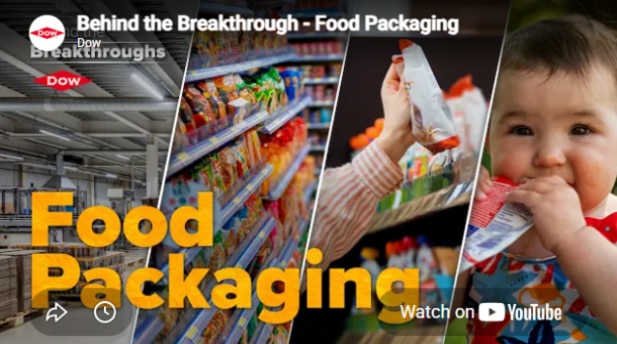
Food packaging has to multitask. Make the package lighter, but keep the food protected. Design it for recyclability, but maintain barrier performance. Add convenience, but make sure the package can still be produced efficiently across different shapes, sizes and formats.
Finding the right balance requires materials and package structures that can help meet multiple performance needs at once.
Food can travel long distances, moving through warehouses, grocery shelves, delivery systems and ultimately into consumers’ homes. Along the way, packaging has an important role to play. Depending on the application, the right materials can support freshness, package durability and the protection food needs throughout its journey.
Making a package lighter can help improve material efficiency, but the package still needs to perform. Materials science can help packaging designers explore ways to balance the amount of material used with the barrier properties, durability and other performance requirements needed for a particular application.
What happens after the last bite is becoming an increasingly important consideration. Designing for recyclability means considering the entire package structure while maintaining the performance required to protect the food inside. It is another important part of the balancing act behind modern food packaging.
Dow develops materials that help flexible and rigid food packaging meet a range of performance needs. That can include supporting freshness, package durability, design for recyclability and performance across different markets, climates and supply chains.
At Pack Studios, Dow teams work with food brands to design, prototype, test and refine new packaging applications, helping move “what if?” ideas closer to real-world use.
The next time you open a snack or unpack a grocery delivery, take a second look. That package is doing more than wrapping food. Depending on its design and application, packaging can help protect food, preserve freshness, help reduce the potential for food waste and support progress toward a more circular packaging system.
The future of food packaging will not be shaped by the shelf alone. It will be shaped by what packaging is made of and by the science that helps it do more.
Twenty years ago, personal electronics were comparatively simple. Phones made calls. Cameras took pictures. Laptops helped get work done. Most devices had one primary job, and that was enough.
Today, one device can film video, track activity, navigate a new city and connect to a meeting from almost anywhere. At the same time, expectations have grown: devices should be thinner, lighter, faster and easier to use.
Meeting those expectations is not only a technology challenge. It is also a materials science challenge.
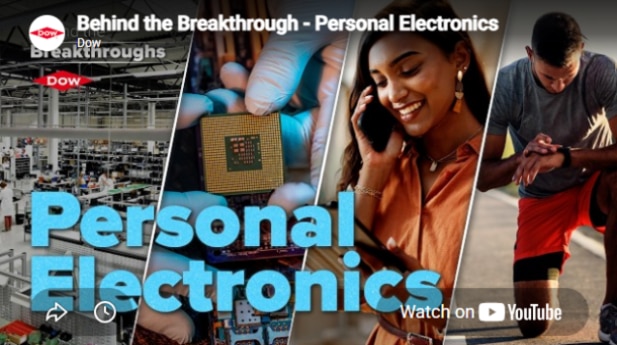
Better performance increasingly has to fit into less space. Make a device thinner, but keep it durable. Add more power, but manage the heat. Extend battery life, but keep the experience fast and seamless. And consider efficiency and environmental impact along the way.
These demands are changing not just how electronics are designed, but what they are made of.
More capability can mean more heat inside a compact device. Materials that help manage heat can support reliable performance while engineers continue to reduce size and add functionality.
Inside phones, laptops, smart watches and other devices are components that need protection throughout everyday use. Materials can help protect sensitive parts and support durability over a device’s life.
People expect powerful devices without unnecessary bulk. Materials science can help engineers pursue thinner and lighter designs while balancing the performance and durability those devices require.
Dow develops materials science solutions that can help personal electronics perform better while giving designers and engineers more options to balance competing demands.
These materials can help manage heat, protect sensitive components, support thinner and lighter designs, and improve durability over a device’s life, with efficiency and sustainability in mind.
The next time you pick up a phone, or open your laptop, take a second look. The device is doing more than it once could, and the materials inside are helping make that possible.
The future of personal electronics will not come from faster chips or sharper screens alone. It will also be shaped by what devices are made of and by the science helping them do more.
This article is part of Behind the Breakthrough, a Dow series exploring the materials science behind everyday products, technologies and real-world progress.