Our Board of Directors exemplifies good governance with solid, diverse experience and credentials.

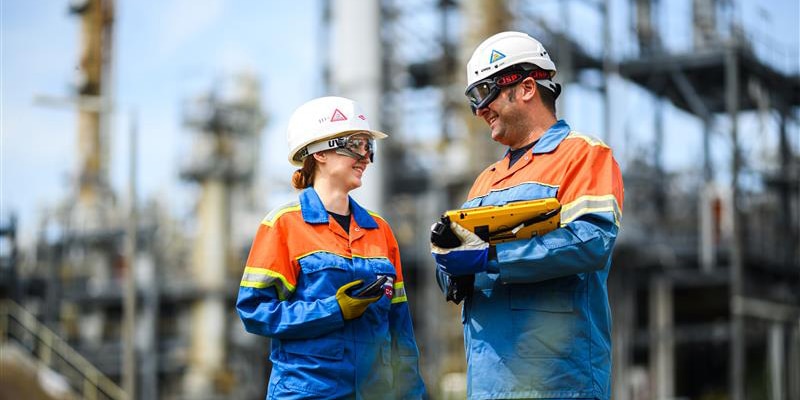
Learn how we make the world a better place as Team Dow. Through respect and integrity, we lead with our core values and innovative spirit to create more sustainable materials science solutions for everyone.

Discover how we’re accelerating positive change around the world. Dow is making a difference in the communities where we live and work.

Find the latest press releases, news updates, awards and achievements from Dow and stay connected on the impact we’re making in the world.

Explore key collaborations and why we make partnership our passion. Through initiatives and sponsorships, we can work together to create a more positive impact for all.
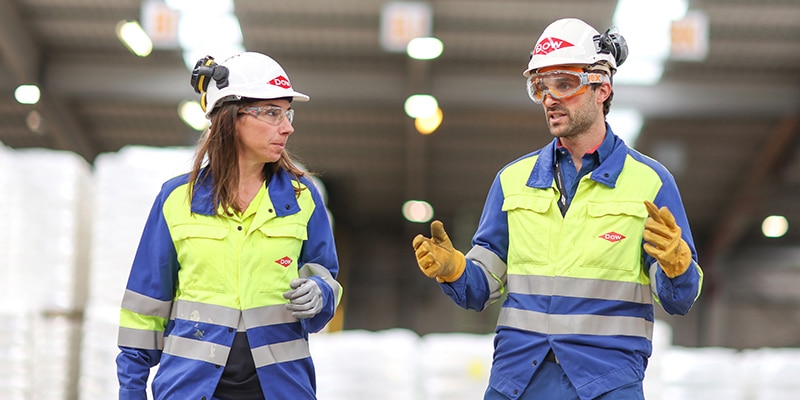
Team Dow makes us one of the most innovative, customer-centric, inclusive and sustainable materials science companies in the world. Find opportunities to join Dow in a capacity that works best for you.
Delivering value and impact for customers, communities, and the planet
Dow's 2025 INtersections Progress Report demonstrates how we deliver value and impact through sustainability, innovation, and strong governance.
Inside the science of sports: Materials and innovation
Discover how materials science from Dow helps power high-performance sports from the ground up.
Solutions for the future of infrastructure
Explore how Dow’s materials science helps turn real-world need into real-world progress across buildings, energy, connectivity, and transportation.
Modern food packaging innovations that are shaping the grocery industry
Find out how packaging from Dow helps extend shelf life, support product safety and reduce food waste.
- Intersections report
- Science of sports
- Future of infrastructure
- Food packaging
This is my title
Sustainable building materials that raise building performance
More than half the world already lives in cities, and that number is expected to grow.
This poses some challenges. Buildings are responsible for about 39% of global energy-related carbon emissions1, with impacts spanning construction and day-to-day operations. To meet future needs, it is important to continue innovating high-performance building materials like roofing and sealants for the spaces where people work, learn, shop and live.
Looking ahead, it’s estimated that by 2040 two-thirds of buildings will be those already standing today2, making retrofits and efficiency upgrades essential.
This video explores:
- How high-performance sealants can help improve durability and energy efficiency across façade and glazing applications (including structural glazing, insulating glass and weather sealing).
- How roofing materials designed for extreme weather and long service life can and strengthen resilience from the rooftop down by reducing replacement cycles and maintenance needs.
- How approaches to lowering the carbon footprint of key building components can help sustainability become a built-in part of modern design.
Balancing energy approaches to help systems last longer
As communities expand, infrastructure must deliver energy that is dependable to power homes, schools and hospitals all while supporting the shift toward lower-carbon systems.
Progress comes from multiple solutions working together, including renewable energy, supporting more reliable energy sources through materials that help systems run safer, longer and more efficiently.
This video explores:
- How natural gas can play a role in the energy mix and how gas treating solvents can remove impurities to help enable safe, clean, more efficient use.
- How solar power performance depends on protection from harsh environmental conditions and how solar panel encapsulant materials help with panel durability, supporting longer lifetimes.
- How innovation at the materials level helps communities plan for rising demand without sacrificing reliability.
Telecommunications solutions built for uptime and efficiency
From streaming and e-commerce to real-time communication, modern life runs on networks. The physical infrastructure behind them must perform under constant demand.
As AI and high-performance computing expand, the stakes rise to meet data center cooling needs. Advanced processing generates far more heat than traditional servers, pushing the sector demand toward liquid cooling for improved energy efficiency.

This video explores:
- Why liquid cooling is becoming critical for next-generation computing and how heat transfer fluids support reliability and uptime.
- How cable protection compounds help networks stand up to weather and wear, supporting long-term performance across systems.
- How “always-on” connectivity depends on materials designed for real-world conditions.
Pavement markings onroads and bridges designed for visibility and durability
Reliable infrastructure that moves people and goods is what keeps society moving forward. With growing cities comes growing demand for roadways and runways that stay safer, clearer and are more resilient through heavy use.

This video explores:
- How pavement marking resins help improve visibility with long-lasting, reflective markings designed to withstand harsh environmental conditions.
- How joint sealants help infrastructure accommodate movement, resist UV exposure, and maintain resilient joints, supporting durability with minimal downtime during application.
- How modern, innovative materials can extend performance and support safer mobility across transportation corridors.
Alberta, Canada
Aratu, Brazil
Bahia Blanca, Argentina
Barry, Wales
Bohlen, Germany
Carrollton, Kentucky
Deer Park, Texas
Estarreja, Portugal
Freeport, Texas
Louisville, Kentucky
Map Ta Phut, Thailand
Midland, Michigan
Plaquemine, Louisiana
Seadrift, Texas
Stade, Germany
St. Charles, Louisiana
Tarragona, Spain
Terneuzen, Netherlands
Texas City, Texas
Zhangjiagang, China
Pending Evaluation
Evaluated/Resilient
Evaluated/Resilience Developing
Evaluated/Resilience Challenged
Evaluation In Progress





















This is some text.
Designing the next generation of movement
Mobility is changing quickly. Electrification, circularity goals, evolving safety expectations, and the constant demand for performance are all reshaping what customers need from materials. This sustainable mobility story highlights teams applying materials science to support these shifts, with solutions designed to perform across a vehicle’s lifecycle.
What makes this work move faster is the mix of perspectives. Researchers who understand the chemistry. Application experts who know what success looks like on the customer’s line. Manufacturing teams who scale reliably and safely. Commercial teams who connect customer needs to capabilities. When that network clicks, progress follows.
Connecting people and powering modern life
Electronics innovation can be invisible until you consider what it supports: connectivity, reliability, efficiency, and the data-driven systems people depend on every day. Our electronic solutions story highlights how innovative materials help meet demanding performance requirements in modern electronics applications.
And this is not work that happens in a straight line. It is iterative by nature, with feedback loops between design, testing, and manufacturing. Progress comes from teams working across disciplines, often in close collaboration with customers, so materials decisions match real operating conditions.
Pushing circularity forward with practical solutions
Packaging solutions and addressing waste is a systems challenge. It is not solved by one company alone, and it is not solved by one material alone. This story on circular packaging focuses on innovation that supports packaging recyclability, with solutions designed for real market conditions and performance expectations.
This is where collaboration becomes the differentiator. The best solutions come from combining value-chain insight with materials science expertise, then scaling what works so it fits into existing processes while helping enable new ones.
Supporting the transition with innovation that scales
The energy shift demands solutions that are manufacturable at scale and dependable over time, often in tough environments. Our renewable energy story reflects how our teams work with customers to develop innovations that support renewable energy growth and deployment.
Progress here is not one big moment. It is hundreds of decisions made well: testing, qualification, optimization, and continuous improvement. People make it repeatable.